
field report: field museum
i am beginning to suspect some of their "pokémon fossils" are not authentic in the traditional sense

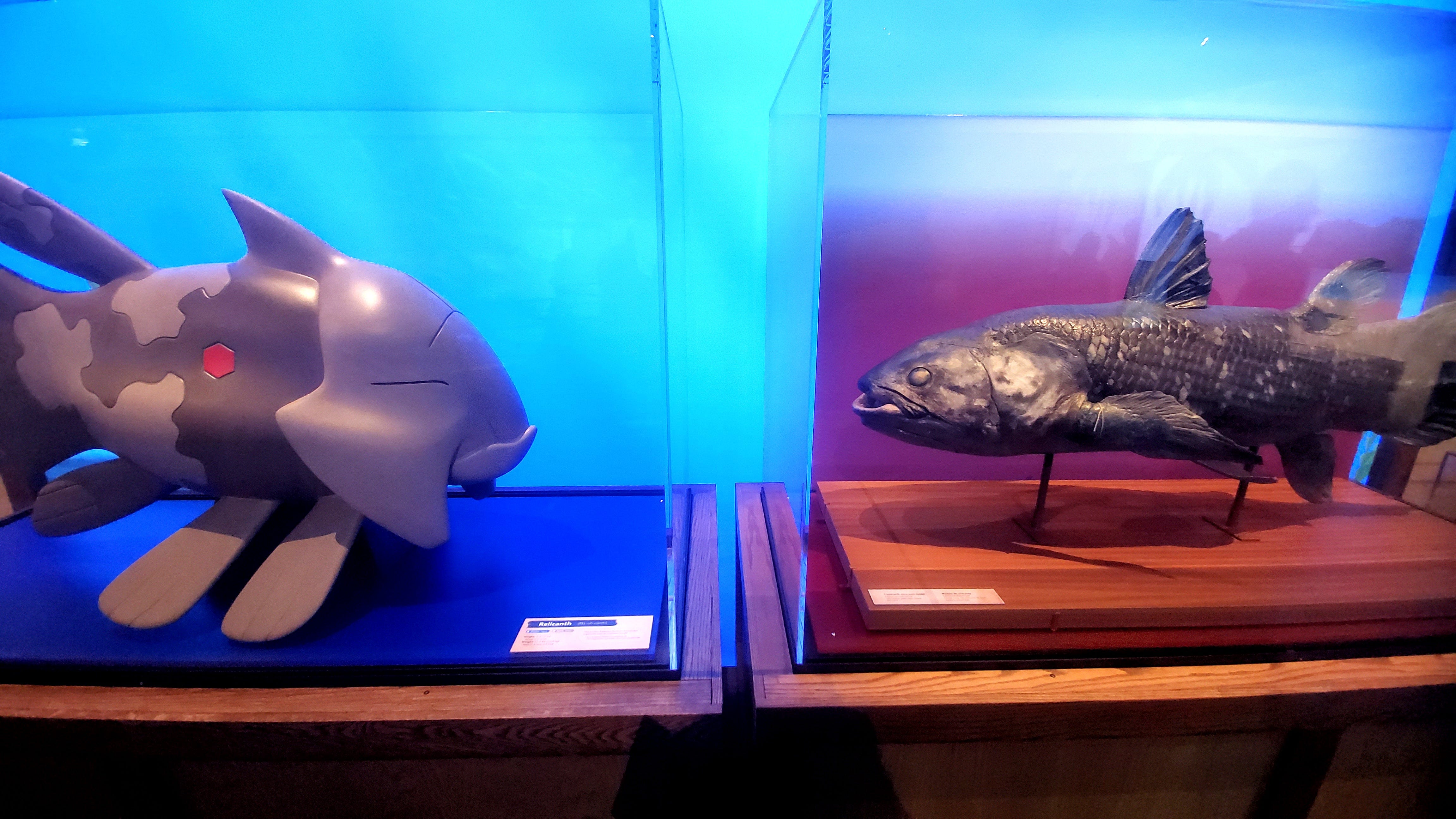
i recently went on the record here about my conversion from pokémon fanboy to hater ten years ago, so of course i somehow ended up the other day at the american debut of the blockbuster “pokémon fossil museum” exhibition that was touring japanese museums for the last five years. i was dragged there while visiting my dad in chicago, who perhaps hadn’t yet gotten the message that i’d grown out of pokémon (to be fair, that was one of my least popular posts, we ran the numbers), though it appears his main motivation was yet again indulging his japanese sister-in-law’s pokémon go (henceforth “PoGo”) obsession, there were exclusive raids or pokémon or something available at the exhibit, i don’t know, i quit the game before it exited beta.
i was initially unenthusiastic about the exhibition visit, but then i found out what’s in it: they’re straight-up displaying skeletons and fossils of pokémon… inside the field museum, chicago’s natural history museum. i found this concept extremely amusing… umberto eco would have had a field day with this, i thought… back in the seventies when he toured america for his essays collected in Faith in Fakes: Travels in Hyperreality, the wax recreations were at least confined to dubious roadside attractions, elaborate reconstructions in history museums were at least based to the best of their knowledge on what had actually existed, newspaper tycoon william randolph hearst at least cobbled together his castle from authentic parts collected at great expense from around the world… but now, at one of our country’s most esteemed institutions, we have a display of fabricated pop culture fossils…

but don’t mistake eco for some kind of euro snob who came to sneer at american tastelessness and absurdity… he adored this sort of thing, and deliberately sought the depths of hyperreality on his cross-country tour from disneyland (california) to disneyworld (florida) and everything in between. he also wouldn’t be quick to dismiss the pokémon fossils on display as mere “fakes”, the question of their authenticity is much more nuanced. true, they’re not genuine fossils in that they are not actually the petrified remains of creatures that lived millions of years ago, but nobody is seriously making the claim that they are. rather, it’s understood that they’re faithful replications of fictional objects, and the distinction between “real” and “fake” begins to lose meaning… how can you make a “fake” pokémon fossil when there aren’t any “real” ones to counterfeit?1 in fact, the pokémon fossils in the exhibition are about as authentic as you can get considering that the whole thing is officially sanctioned by The Pokémon Company, the ultimate authority on pokémon canonicity…
In this sense Disneyland is more hyperrealistic than the wax museum, precisely because the latter still tries to make us believe that what we are seeing reproduces reality absolutely, whereas Disneyland makes it clear that within its magic enclosure it is fantasy that is absolutely reproduced. The Palace of Living Arts presents its Venus de Milo as almost real, whereas Disneyland can permit itself to present its reconstructions as masterpieces of falsification…
though the pokémon exhibition seems to be an admission that reality alone no longer suffices to draw visitors to the museum, the curators are not quite ready yet to ditch all pretenses and completely surrender to fiction2… the pokémon fossils are smuggled in accompanied by dirty “real” facts and fossils. the epistemic status of each display object and its flavor text is indicated with a color-coding system:
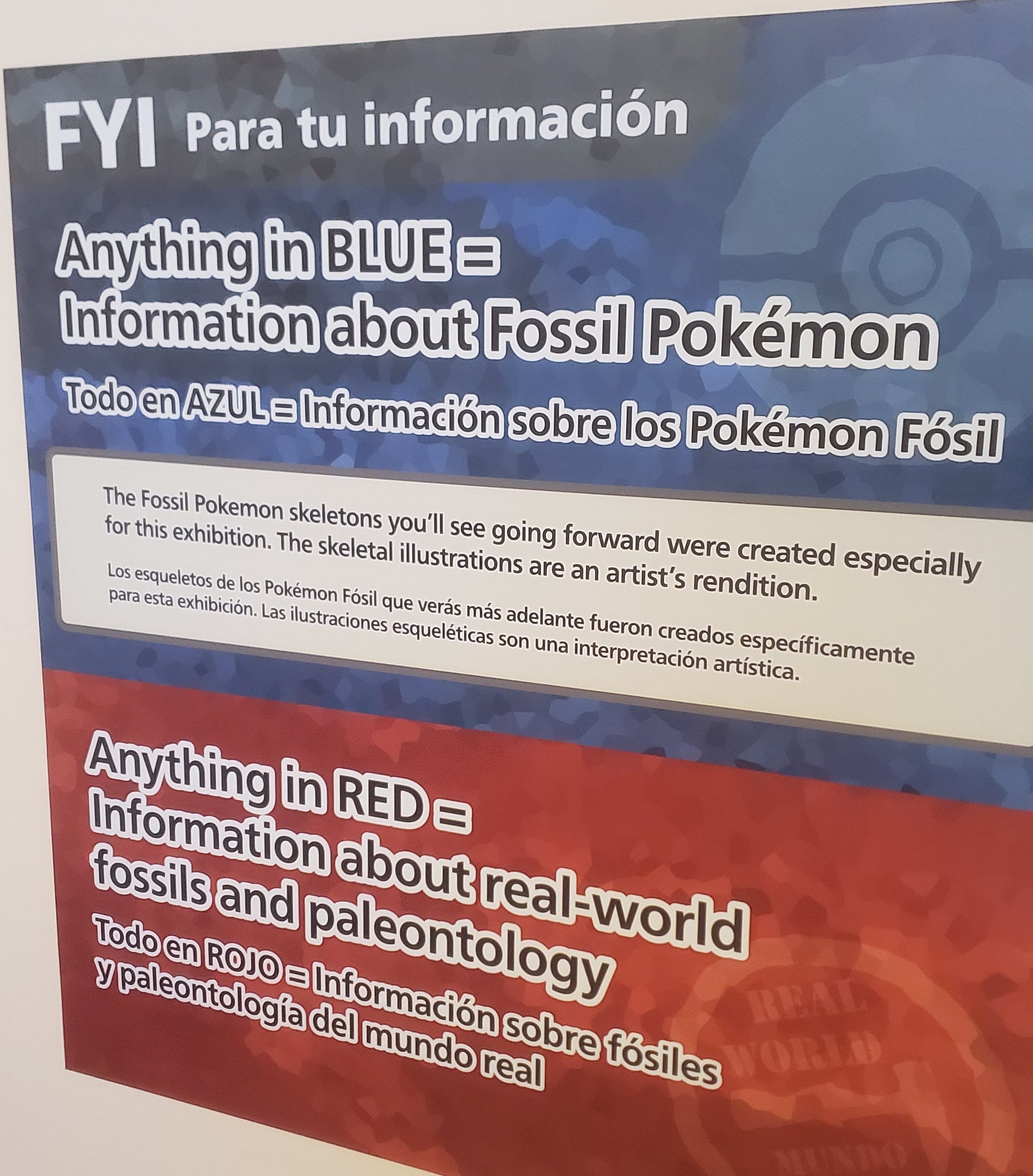
it’s an interesting concept, i know there are definitely some who would prefer if sam kriss essays were color-coded in a similar fashion3. the balance of fact and fiction is carefully maintained within the exhibition by pairing each fictional fossil with artifacts and information about its “real world” inspiration:
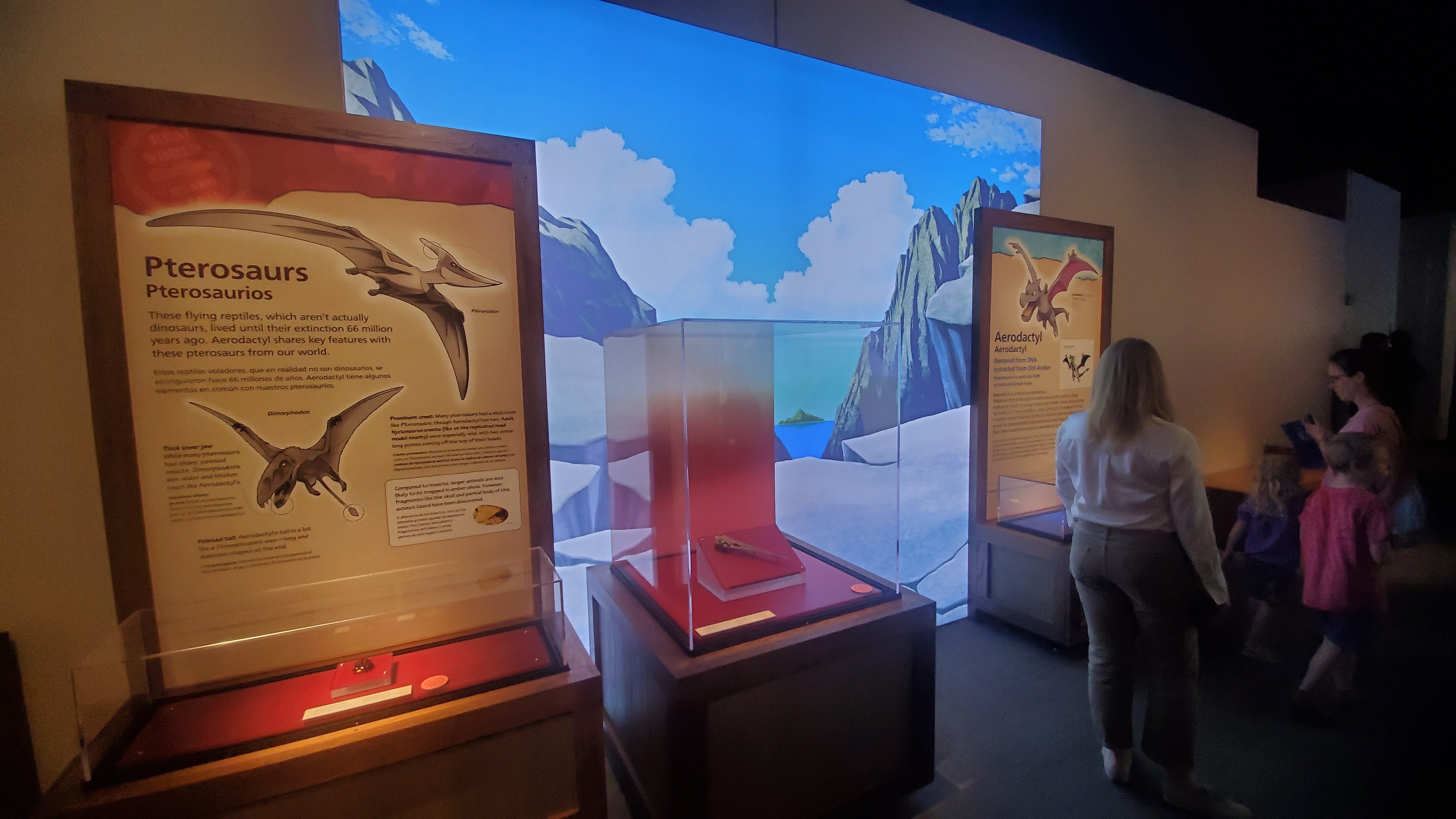
neither fact nor fiction were privileged over the other, real fossils and fake fossils alike were placed reverently in identical display cases as though they merited similar levels of protection and care.
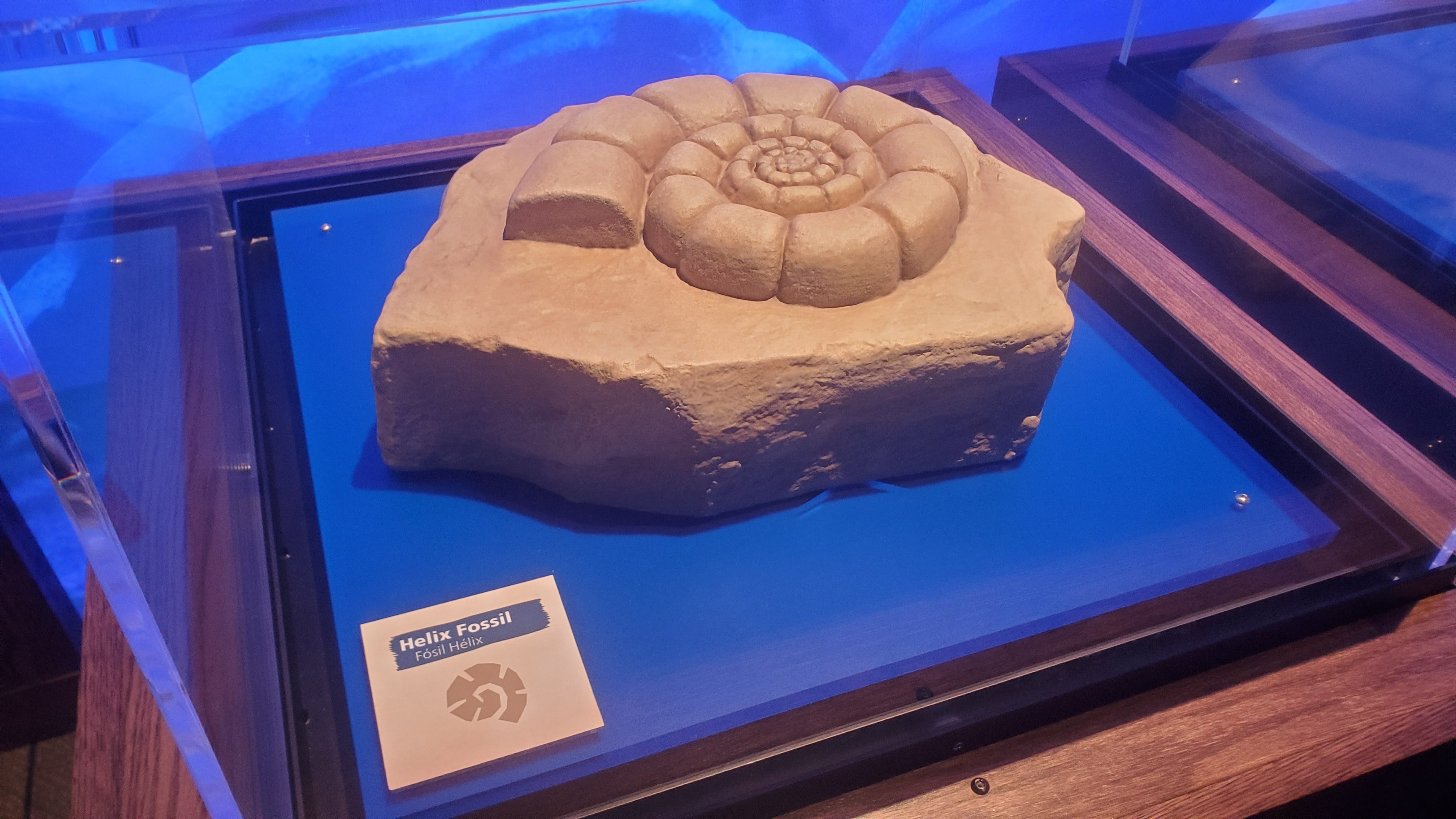
i spent my time in the exhibition floating around the hall taking it all in with a wide grin, basking in the beautiful absurdity of it all… there was plenty of intrepretive text posted around, but i ignored them all because they were either Video Game Lore (blue) or Dinosaur “Facts” (red, debateably)4. when i think about it, the juxtaposition of pokémon and dinosaurs is not as egregious as it may seem… the illustrations of the “real” dinosaurs are just as much “artist’s renditions” as the pokémon drawings are, and both are ultimately based upon the same fossils. paleoartists extrapolated a few big dusty bones into fantastic primeval landscapes and epic saurian dramas that captivated the public and made a permanent cultural mark, in the same way that satoshi tajiri spun his fascination with childhood bug catching into the pokémon games. to some extent, the designs of not just the “fossil” pokémon but all pokémon owe a debt to the early (paleo?) paleoartists, whose designs they’re descended (or should we say evolved) from.
touring some of the museum’s other galleries afterwards, i noticed that the supposedly “real” dinosaur fossils aren’t so real either… dinosaur skeletons are never discovered preserved fully intact, often fragmentary, and the ones put on display are often “completed” or “enhanced” with replica bones… sometimes major pieces are withdrawn for study, seamlessly substituted in the displays by casts. the truth is that the museum has always been fake, fictional, hyperreal to some extent, the pokémon fossils are just the high-water mark concealing the depths…
checking out chicks rocks
outside the pokémon exhibition, the museum highlights for me were the Hall of Birds and the Room of Rocks.

the field museum’s extensive collection of taxidermied specimens was the perfect zoo alternative for me… i haven’t been to an actual zoo in years, as a Sensitive Young Man i find it a bit depressing seeing noble animools confined like that5. yes, animals have to die (or be killed, which they did in the old days) in order to be taxidermied, but you only need to sacrifice a single individual to create a taxidermy that can be displayed to generations of museum visitors, i saw quite a few in the field museum that according to their labels were over a century old. also, with taxidermy you can get up close and really get a good look, stare right into their beady eyes (in the case of taxidermied birds, they are literally beads)… one of the problems with real birds is that they’re too flighty. umberto eco spoke of this too:
A real crocodile can be found in the zoo, and as a rule it is dozing or hiding, but Disneyland tells us that faked nature corresponds much more to our daydream demands. When, in the space of twenty-four hours, you go (as I did deliberately) from the fake New Orleans of Disneyland to the real one, and from the wild river of Adventureland to a trip on the Mississippi, where the captain of the paddle-wheel steamer says it is possible to see alligators on the banks of the river, and then you don’t see any, you risk feeling homesick for Disneyland, where the wild animals don’t have to be coaxed. Disneyland tells us that technology can give us more reality than nature can.
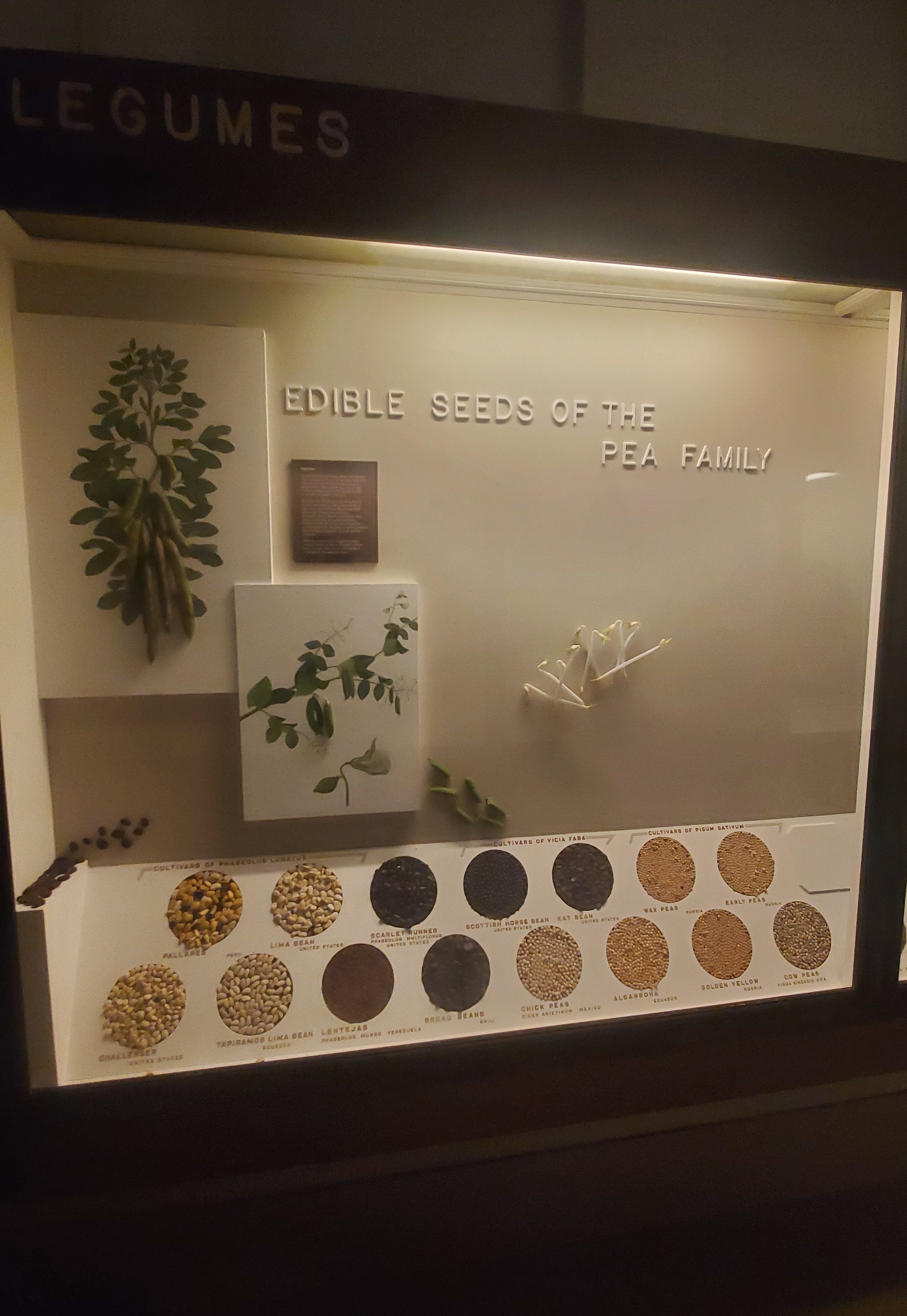
one thing that struck me was how many of the exhibits themselves were downright historical, there were more than a couple display cases that looked like they’d been untouched for over fifty years. there were others that looked like they’d been created that long ago and then accreted additions in strata over the decades. in fact, the field museum taken as a whole can be viewed as a sort of meta-exhibition of trends and evolution in museum displays and curation, throughout the museum you can find exhibits clearly dating to every decade since the fifties. the most obvious indicator of an exhibit’s age is the graphic design and typography of the interpretive text, then once the age has been established you can distinguish how design aspects specific to museum exhibits have changed over time… as you might expect, the exhibit meta was simple in the early days: “the theme of this hall is ‘plants’. over here is a display case with every kind of bean. over there is a display case with ‘Non Alcoholic Beverage Plants’6.”
the oldest displays are clinical, standard rectangular display cases in neat rows, the labels and interpretive text written in the textbook register… any humor is either bone dry or unintentional, only a result of changing fashions in the decades since the exhibits debuted. i’m slightly amused by the caption for the long-extinct “Great Auk” that reads “Although able to exist in the face of natural enemies, they disappeared when persecuted by civilized man”, or a lineup of rocks labelled “Economic Minerals”. the meteor exhibit contained this gem:
Meteorites and Meteor-wrongs
It’s not easy to recognize a real meteorite. Common Earth rocks can look like meteorites. In the Chicago area, many kinds of industrial slags are also mistaken for meteorites. We call these meteor-wrongs.7
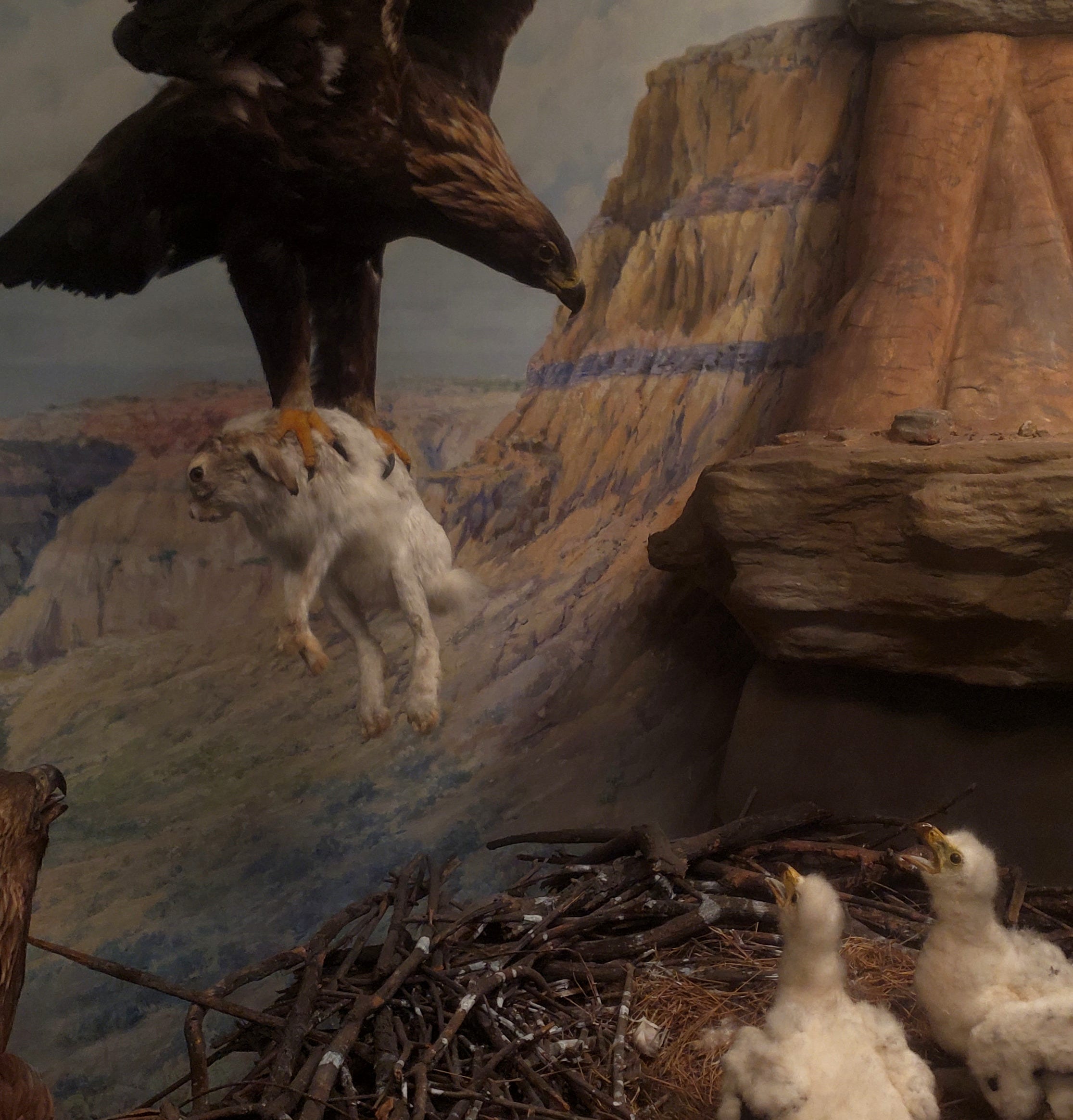
sometime in the seventies or eighties, exhibit designers started to take some more creative latitude and introduced minor theming to exhibits, for a collection of elaborate dioramas containing large taxidermied animals the interpretive text is presented as national park notice boards. interactivity and information delivery in other formats begins to appear as well, there are handsets hanging from the bottom of the notice boards that provide audio explanations. then, in the nineties and noughties, exhibit designers embraced the idea that they should really be producing “edutainment”, perhaps motivated by increasing competition from more stimulating “educational” content coming in the form of computer programs and tv shows (the era of “Utopian Scholastic”). the tone of exhibits became more casual, playful, more engaging… exhibits have more elaborate interactive parts, new technology like screens and projectors help make exhibits flashier (the lighting in older exhibits was notably subdued). the final form would be the museum as a natural history-themed theme park, which the pokémon exhibition represents a large step towards…
but, in the newest exhibits i also see the traces of another trend, and even within the pokémon exhibition: the treatment and practice of exhibit design as a serious art form. the modern exhibition is no longer a regimented presentation of hard facts and sterile specimens, it’s more like an essay laid out in physical space, illustrated with real objects and artifacts… many exhibitions now have a specific theme and thesis, essayistic titles, the exhibits themselves are designed with an enforced linear flow (in the video game level design sense, not literally linear) guiding visitors through a narrative or argument with an intro, body, and conclusion… i am even beginning to think of this post as a museum with four different exhibits under the same roof…
the future is everybody dancing alone to their own beat forever
the museum normally closes at five and as the hour approached we expected to be politely directed to the exit at any moment, but something was afoot because we were allowed to continue roaming the exhibit halls for five and then fifteen minutes unmolested. when we emerged back in the central atrium, we saw that they seemed to be setting up a stage for some kind of event, which perhaps explained why the museum was still open. around the stage perimeter they had some posters set up, and while we were inspecting them trying to figure out what was going on we were accosted by an enthusiastic lady in a pale suit. she was in charge, and explained to us that this was an “activation event” for the renewed africa hall (not set to open until 2028), a “Silent Party” featuring three diaspora DJs. i’d never heard of such a thing, the term itself sounded oxymoronic to me… apparently, in a “Silent Party” everyone gets a pair of special headphones and the DJs play their sets simultaneously, each broadcasting on a different channel that you can swap between using the headphones.
as someone who has hosted DJ events before, i can kinda see what perceived problems this is intended to address - it won’t damage hearing, it’s inclusive of people with “sensory issues” or who might be uncomfortable with music being played too loud8, there are multiple options so people can choose the one that’s best for them, and since they’re all playing at the same time none of the DJs has to feel bad if they don’t draw as big a crowd on the dance floor as the others. to me that sounded lame as hell, at the precise intersection of three social trends i loathe: safetyism taken so far that even causing mild discomfort is unacceptable, radical inclusionism that tries to accommodate everyone to the point of appealing to nobody, and of course social alienation, i’ve touched before on how everyone always having headphones on listening to their own music is antisocial. we’ve completely lost the plot here, what even is a party or concert if not a communal experience glued together by shared sound… why even bother with the DJs, why not just keep your own headphones on and listen to your own music? why even bother coming out to the museum, why not just stay home and listen to your music alone? people are already hosting their own silent parties all the time, and that’s precisely the problem…
though i was morbidly curious to see what it looked like in practice, we did not end up sticking around for it because we hadn’t eaten all day. however, i did search online for footage from the event… i couldn’t pull any up, but i did find this promo video they’d shot at the last one9, which you can judge for yourself…
exit through card shop
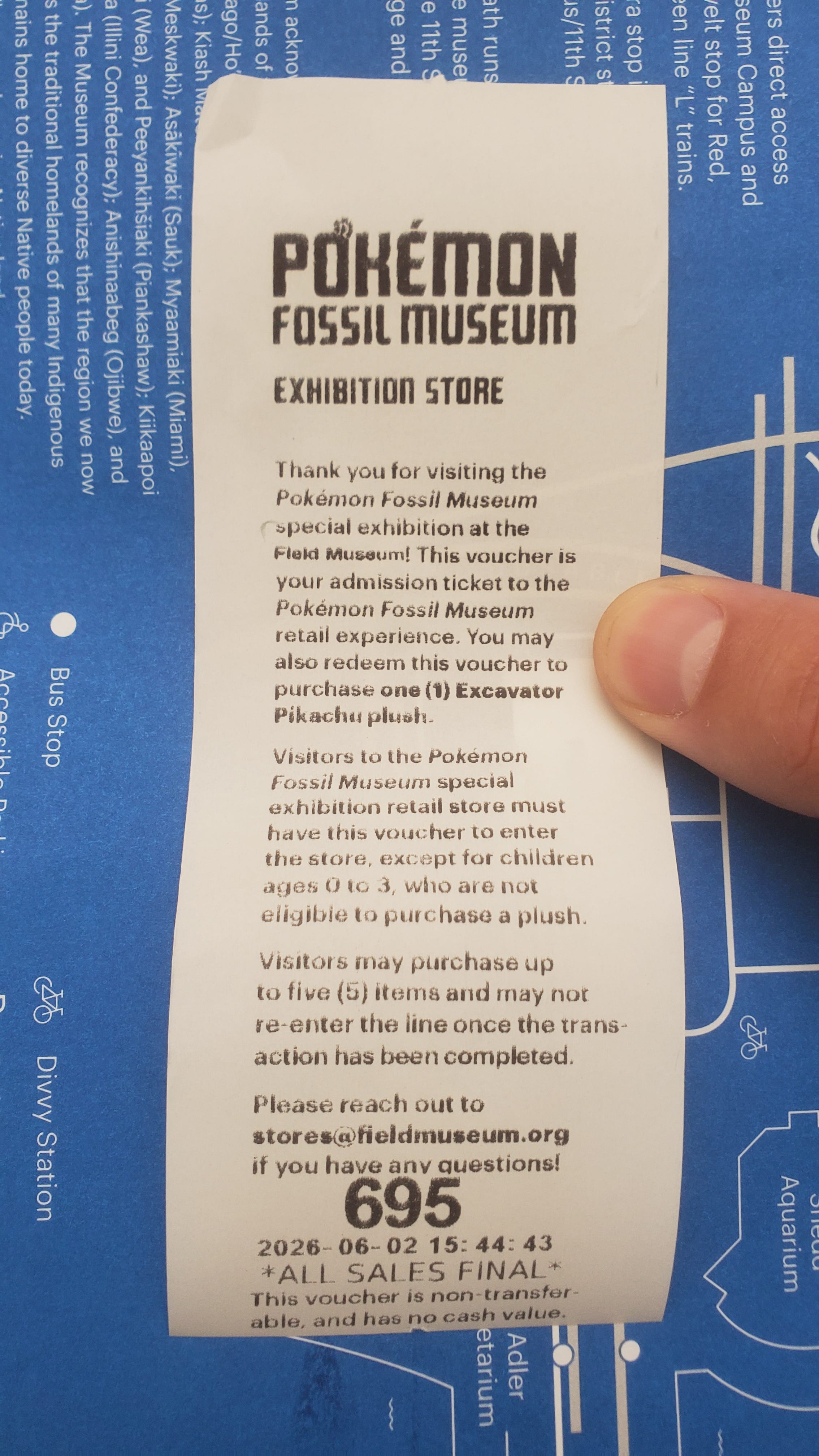
at the pokémon fossil exhibition exit, a guy printed off and handed you a voucher valid for entry to the “pokémon fossil museum exhibition store”, located on the opposite side of the atrium. the voucher mostly contained fine print regarding the rationing of the exclusive merchandise available for purchase:
however, for exhibition visitors the real money isn’t in the exhibition store at all, it’s in the exclusive promo pokémon card they hand you for free when you enter the exhibit. the current pokémon card mania means that the promo cards are of course going for a hundred bucks apiece online, more than enough to pay off the combined admission price to the museum and special exhibition (i briefly considered offering random kids in the exhibit ten bucks for their cards). because they were handing out a card to every chumbo-wumbo coming in, i knew the supply is constantly increasing (card printer go brrrr), so i tried to list mine as soon as possible. when we had a free moment, i borrowed a ledge in the museum to take a picture of my card for the listing:
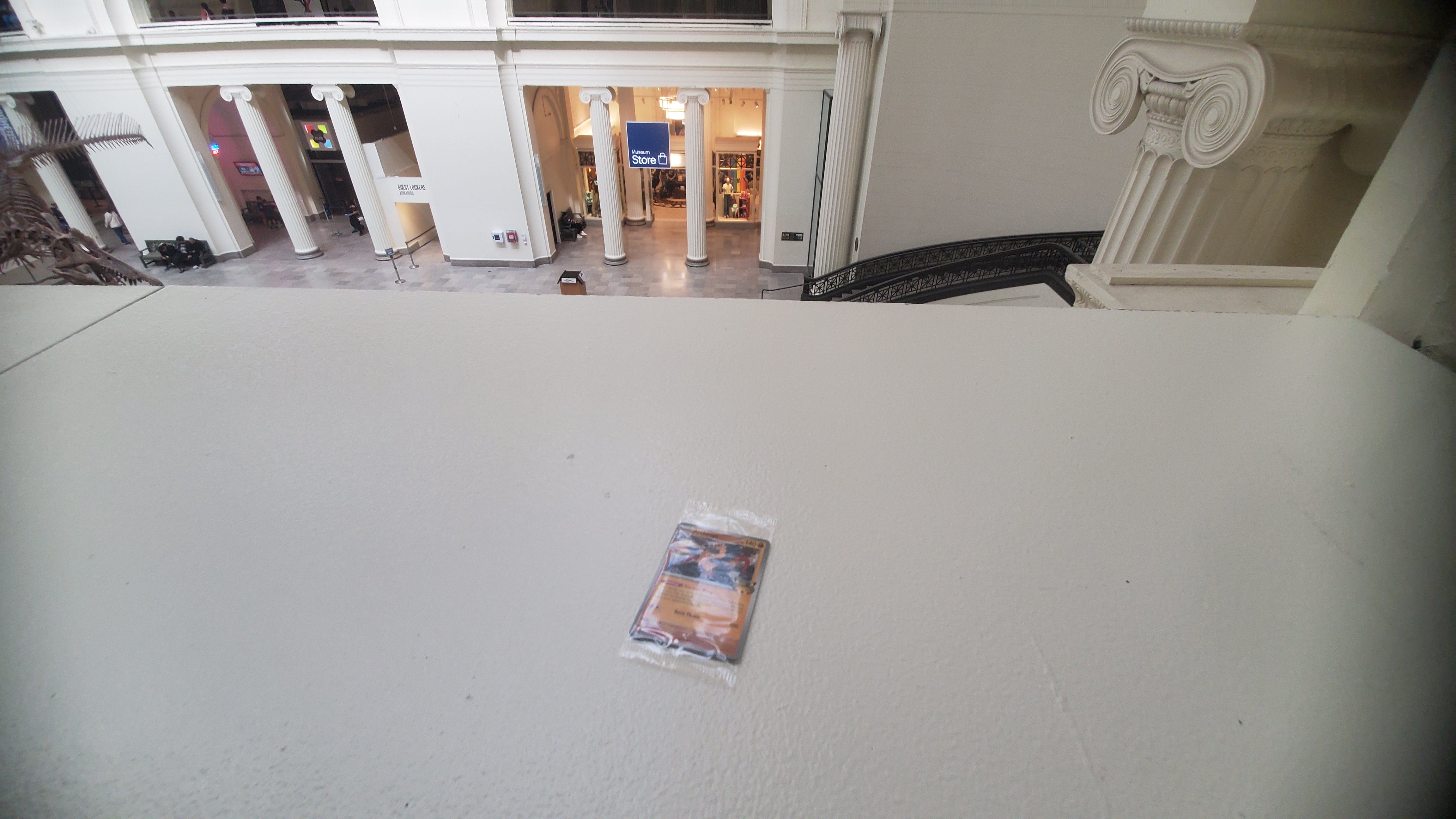
within a couple hours, i already had an offer to buy it for $75… this is how we keep the substack paywall-free.

there is a name, incidentally, for these kinds of “authentic fakes”, this order of hyperreal object: simulacra
i am confident, however, that the crowds have few qualms about this and would show up regardless
from The law that can be named is not the true law:
Maybe Kafka’s background is significant here: from a Jewish perspective, all secular law is basically indistinguishable from the Poro. His nightmare ended up coming very close to the ideal form of the law, but it’s not quite there. How secret is this law, really, if all these officials and initiates are allowed to know it? In Kafka, the higher judges that know everything might be very far away, but they still exist. The absolute most basic law would be a totally pure prohibition: one in which the content of the law is forbidden to everyone. There is something you’re not allowed to do, but you’re not allowed to know what it is, and the authority that enforces the law is not allowed to know it either.
Such a law has, in fact, existed: in England, during the sixteenth century. Exactly one person has ever been charged under it: the Elizabethan nobleman Henry Poyntz, Third Earl of Craven.
Craven was a notorious libertine, a favourite and possible lover of Elizabeth I, and (allegedly) an atheist. One of his risky inventions was a sport he called ‘heretickall Bear-bayting,’ in which he would keep two pet religious dissenters, with totally opposite views on the nature of God and man, and after dinner allow them to scream obscenities at each other for the entertainment of his guests. After a few rounds everyone would vote on the winner, and the loser would be turned over to the ecclesiastical authorities.
the placards also seemed intimidatingly wordy, mostly because they were bilingual english/spanish and thus bore twice the amount of text you’d actually need to read
discomfort about this is probably why zoos are pushing the “conservation” angle so hard these days
an actual label i saw in the Hall of Plants, referring to tea and coffee and a couple more exotic examples like mate
while doing “research” for this post, i encountered the incredible meteorite website of dr. randy korotev, beleaguered lunar geochemist sick of being bothered by people with spurious meteorite discovery claims:
Since I began my website about lunar meteorites in 1998, I have received more than 25,000 inquiries about meteorites. In 2025, I was contacted 4009 times by 1175 different persons from at least 70 countries. Nearly all of these people questioned whether they had found, bought, or inherited a meteorite, had questions about a funny-looking rock, wanted to sell me rocks, wanted to chat about meteorites (I do not chat), or chastised me because they found my admittedly rude admonishments below to be too rude.

Since 2004, a man from Sweden has sent me more than 10,000 pictures of rocks he claims to be from the Moon. They are all accompanied by words like “THE WORLD’S OUTSTANDING MOST BEAUTIFUL genuine Lunar breccia meteorite SWE2003 with gold fusion crust,” or “You will NOT find such genuine anorthositic rich extreme Lunar meteorites with rare green, gold and dark beautiful fusion crust on the Washington Lunar list and you can also see Mini-Moon spherules, untouched and not sliced!” None of these things are meteorites of any kind. They are industrial slags.

one issue i frequently had to worry about was noise complaints, which a “silent party” would help avoid… but the field museum is big and isolated enough that i’m sure they’re won’t receive any noise complaints even if they really blast it
this was actually the second installment of the “Silent Party”, somehow they’d decided it was worth doing again